
Who draws
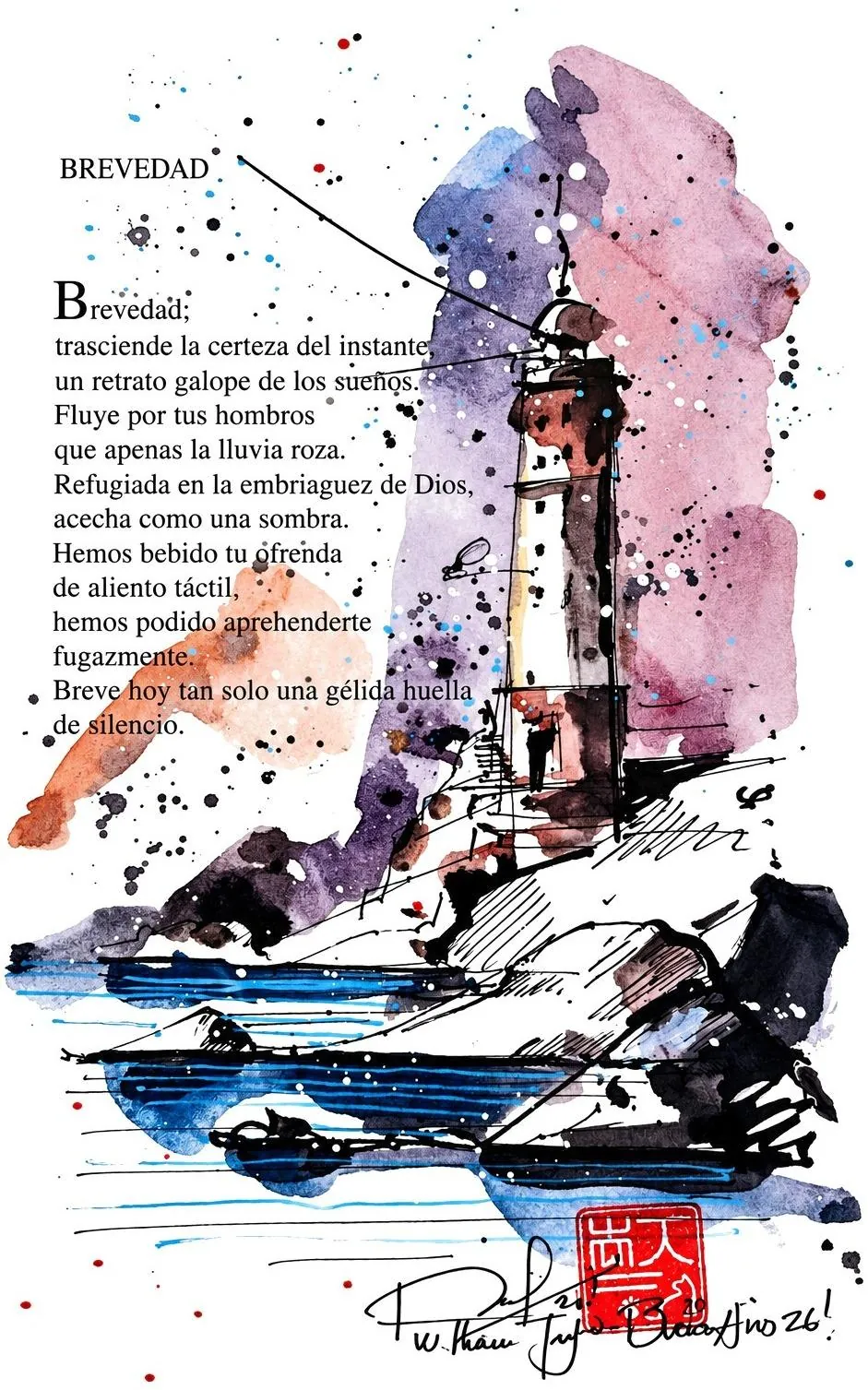
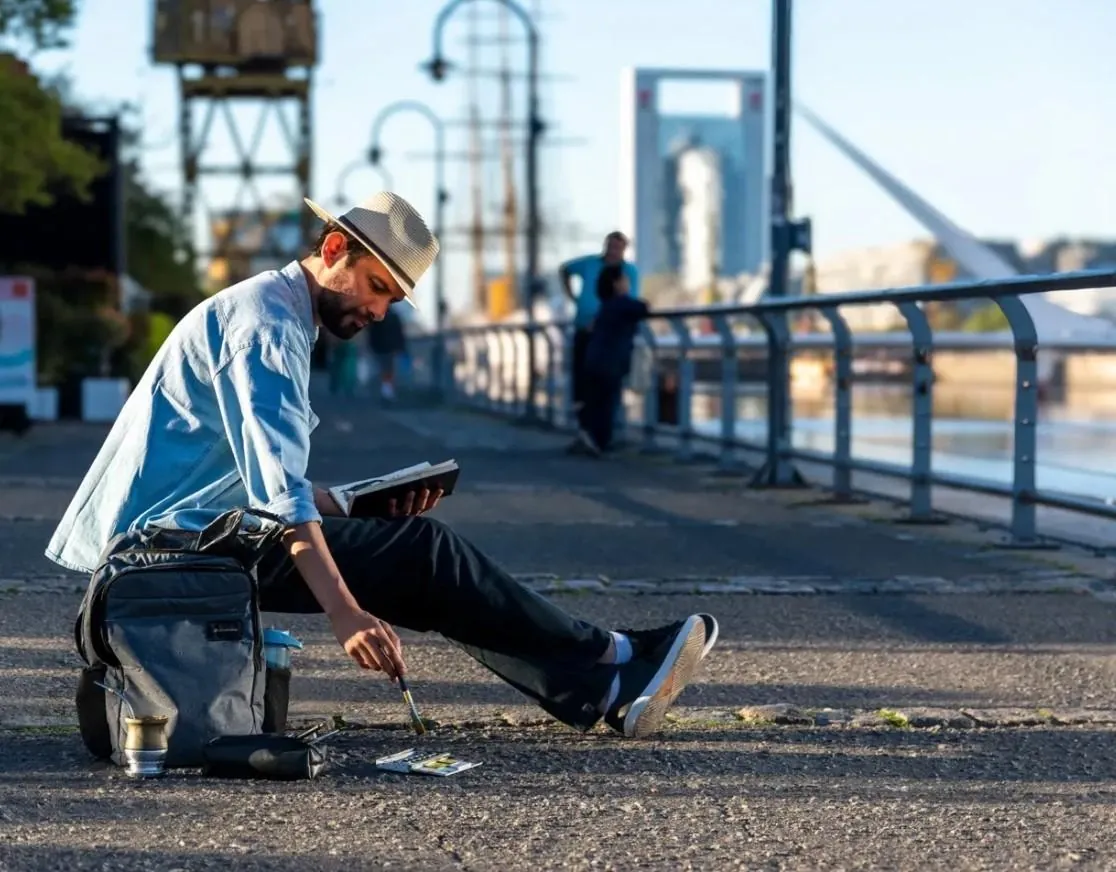
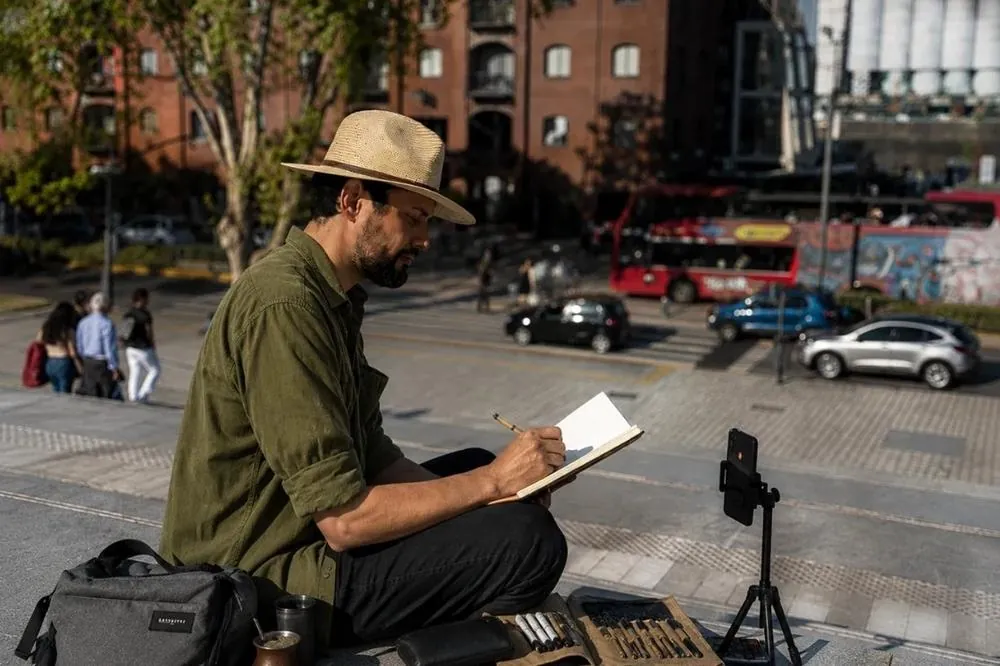
William - Cornellius. Architect and urban sketcher. He works on the street, facing the scene, and records the city as a kind of urban chronicler. As a lecturer in Graphic Expression and Visual Communication, he is interested in narrative: what happens in the scene, how the city is lived, and the spirit of the times. To tell it, he relies on the expressiveness of line, his ink stroke, dripping and spontaneous, where emphasis and synthesis do the communicating. Color comes in as a complement, to create atmosphere and visual impact. He draws in leather journals, sketchbooks and old books that he alters; he takes on commissions and teaches workshops for locals and travellers from all over the world.
I
Journals and sketchbooks.
These are the two formats I work in.
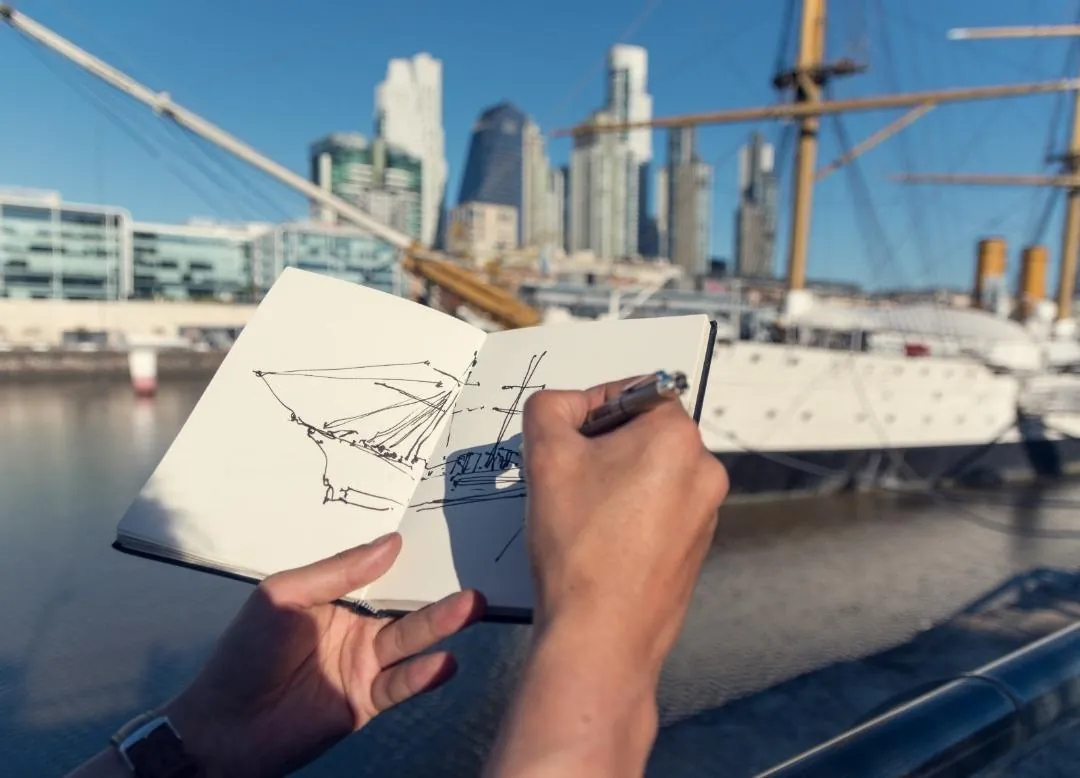
The journal is the notebook that goes out on the street with me. I open it on any corner, without preparation: direct ink, no preliminary sketch, and whatever stays, stays.
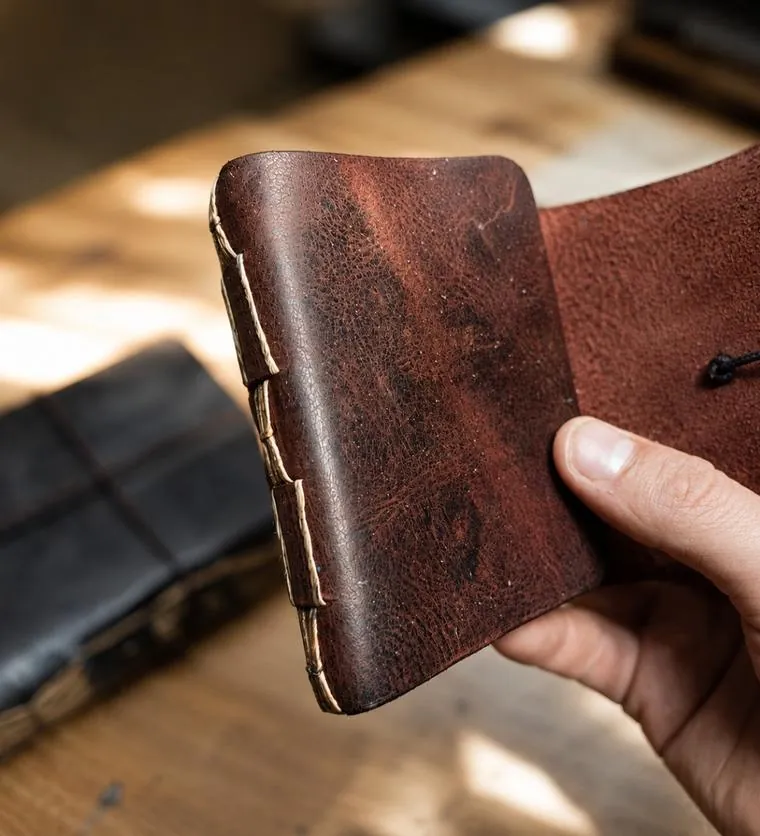
The sketchbook is something else. It takes months to fill, and every page is a decision. Neighborhoods, seasons and moods gather there.
La bitácora me pide velocidad; el sketchbook, paciencia. Pero los dos me piden lo mismo: mirar bien antes de trazar. Ese momento de observación es donde pasa todo; el resto es técnica, y la técnica se aprende. Desde ahí enseño, no desde el dibujo bonito, sino desde aprender a mirar.
II
¿Qué materiales uso para dibujar?
In urban sketching there's no recipe and no rigid process. Watercolorists, architects, illustrators and even manga artists go out to draw the city, each in their own way. Right now my search is about the expressiveness of line, of the stroke, as the main driver of the drawing, and about creating atmosphere with color as a complement.
I give line a lot of power: dripping, in ink, natural, spontaneous, expressive. I play with emphasis and synthesis so that the line tells the story. Color finishes the expression: shadows, tones, temperature. I always look for harmony between the two, but in my drawings line plays the leading role.
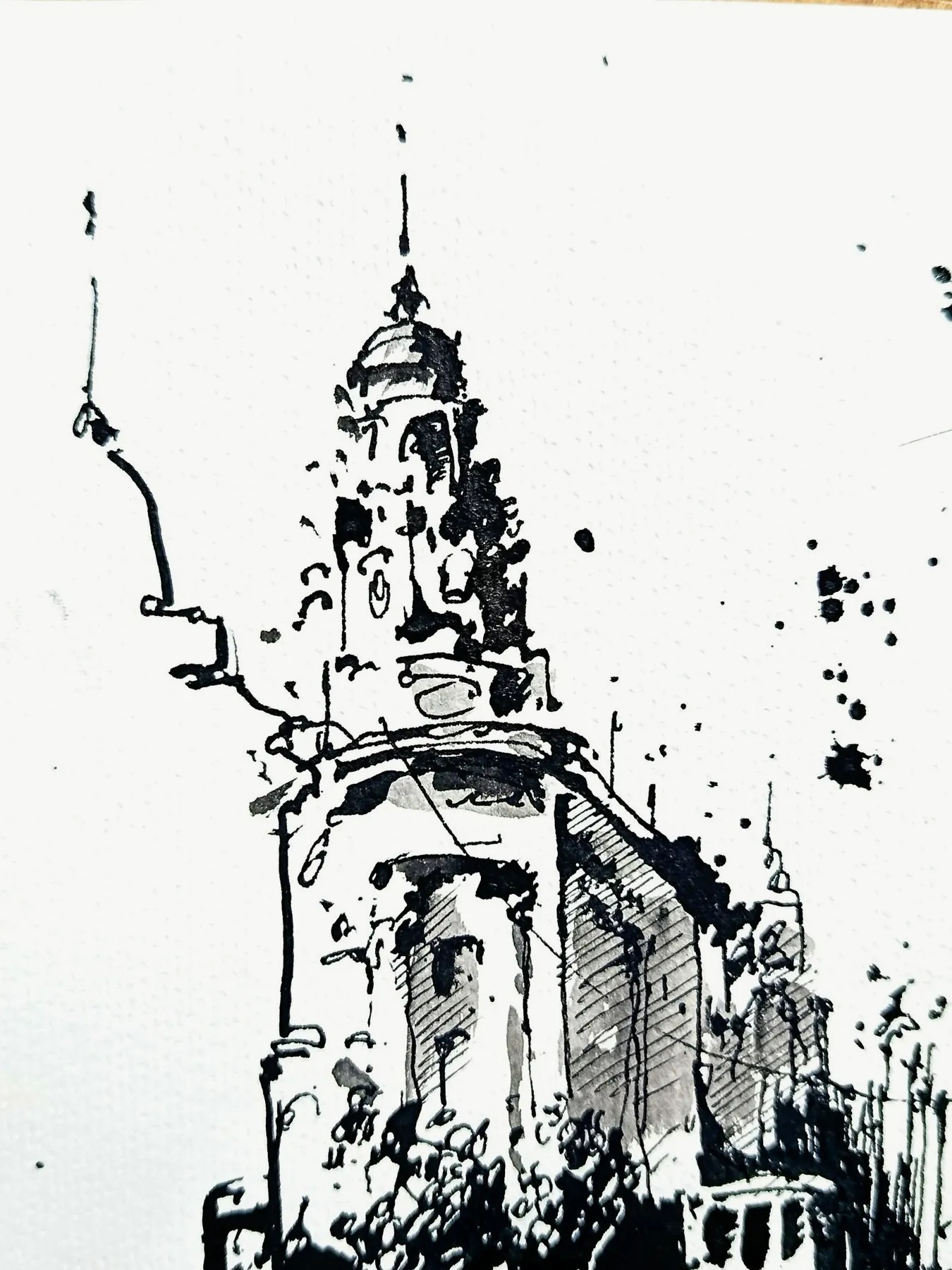
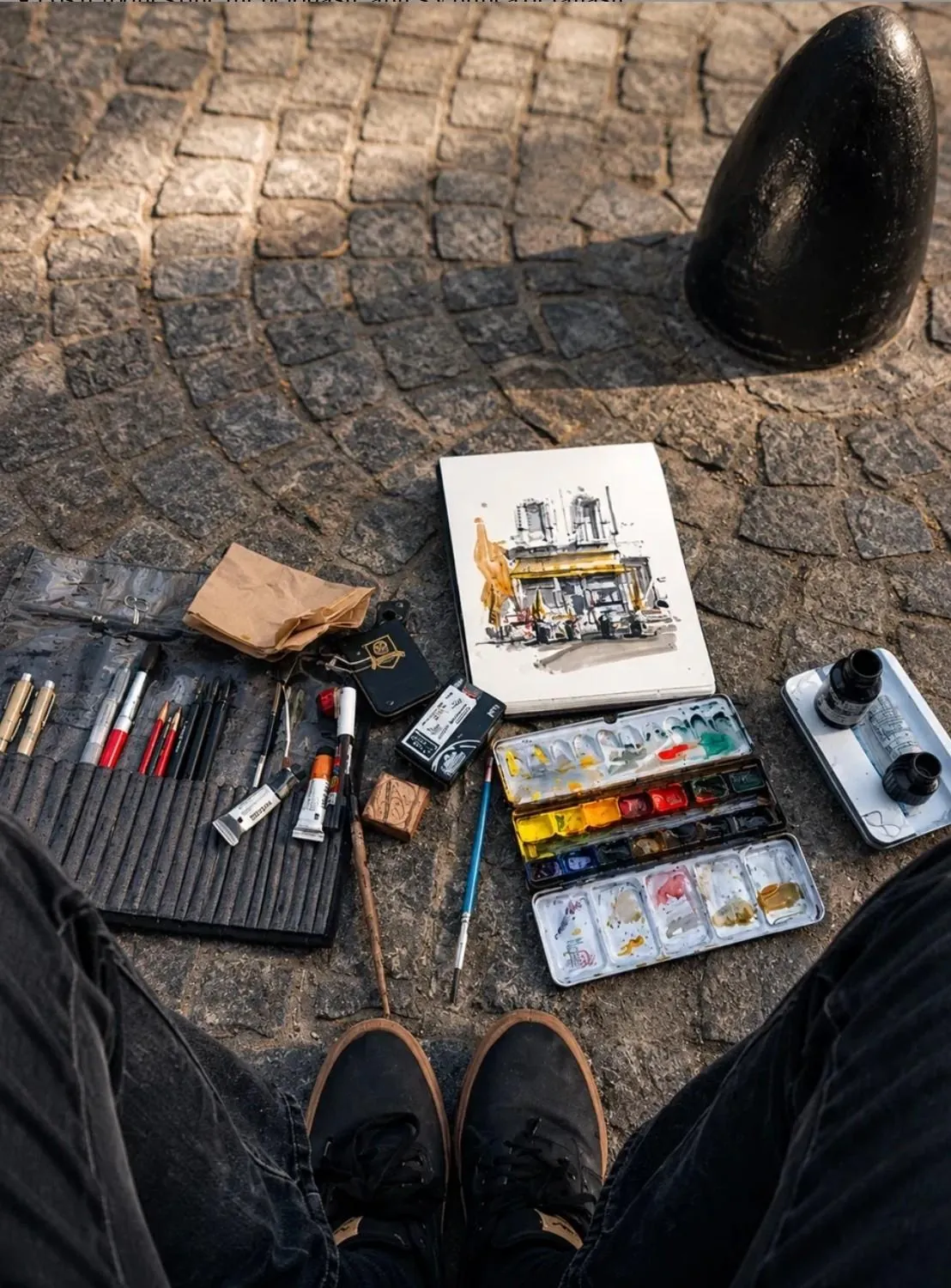
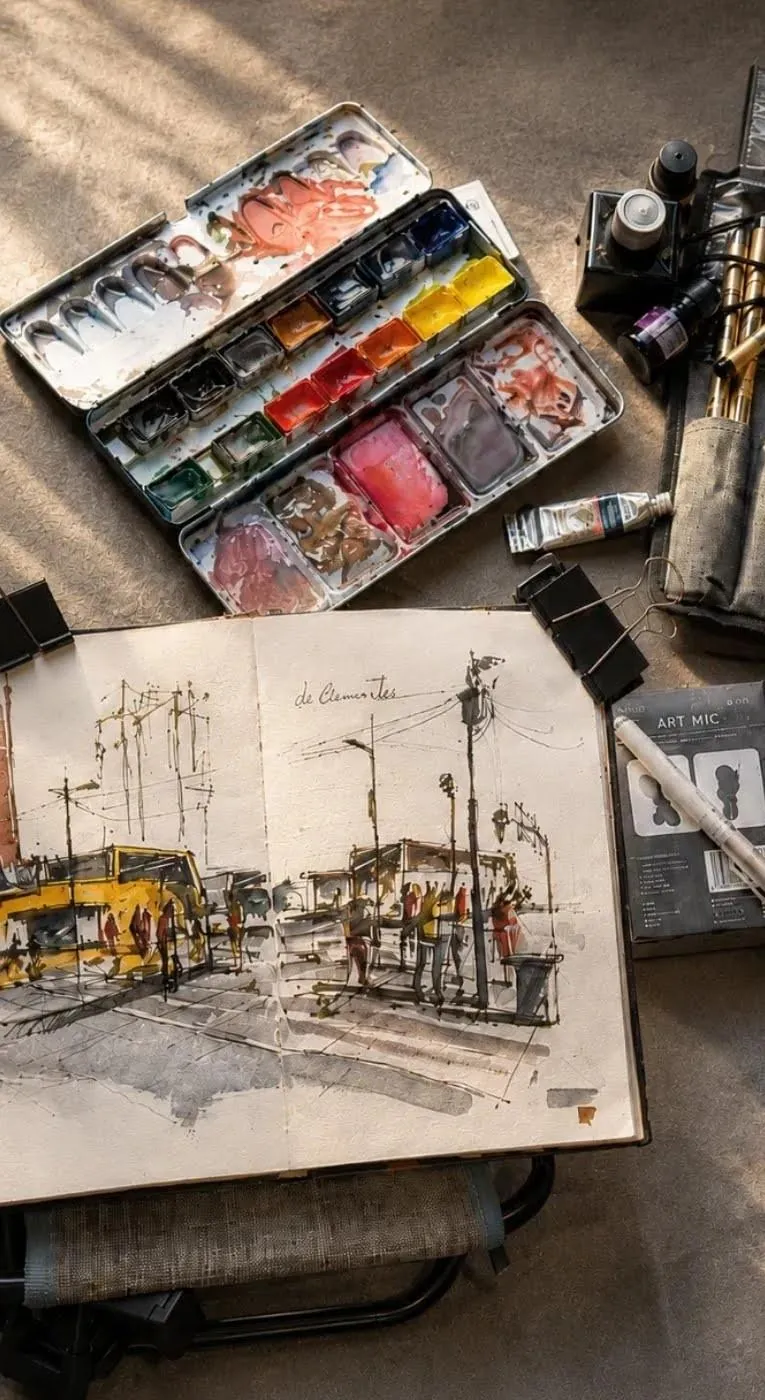
People always ask me what I take to draw and what I recommend taking. Mine is this: waterproof inks, mostly Rohrer & Klingner and Winsor & Newton, because they resist water and let me work over them with watercolor without the line bleeding. I load them into a dip pen with Brause 511 nibs, and I alternate with fountain pens and a 6B pencil depending on what the drawing needs. Everything goes rolled up in a fabric pen roll.
For color I work with full palettes that I top up with individual tubes. Right now I use Rosa Gallery watercolors, from Ukraine, and I mix them with Argentine or Japanese brands.
At the moment I'm using a Hahnemühle A4 landscape sketchbook, 180 g, and a Canson A5 portrait one, and I always alternate them with a leather journal. When I finish, I sign with a stamp in red ink.
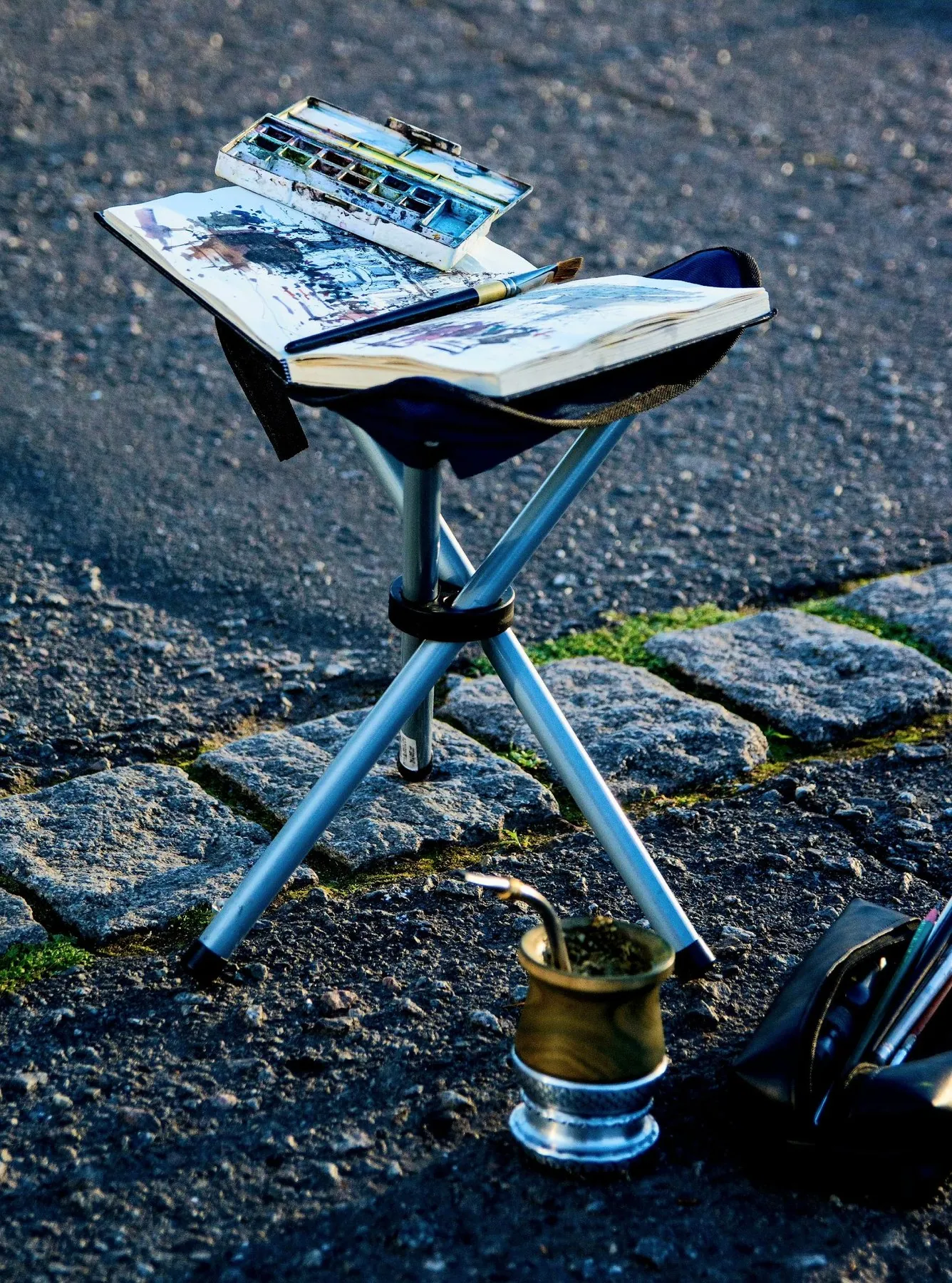
I never go out without my folding stool. We often go out to draw without one and end up limited to the views from the places where there's somewhere to sit. With a stool you can choose any view and sit wherever you like. I also carry a tripod to record the process.
And I always carry a box of postcards in my backpack: I give them away, I offer them, and they're often my business card.
What I recommend, especially when in doubt, is to take the bare minimum: three or four tubes of watercolor, a brush, a pencil and a sketchbook. Nothing else. The more things we carry, the more indecision takes over, and we end up mixing materials and concepts precisely because we haven't decided. The simpler, the better.
You also have to think about comfort. At the table at home, with the light falling right on the paper, everything is easy. Outside it's a different story: there's wind, people watching, it might rain or the sun might blaze, it might be 35 degrees in summer or 5 in winter. You have to be prepared, but not as if you were going camping: just enough to be comfortable and not have a bad time. Don't let indecision end in an eight-kilo backpack to go and draw in a square or at the café on the corner.
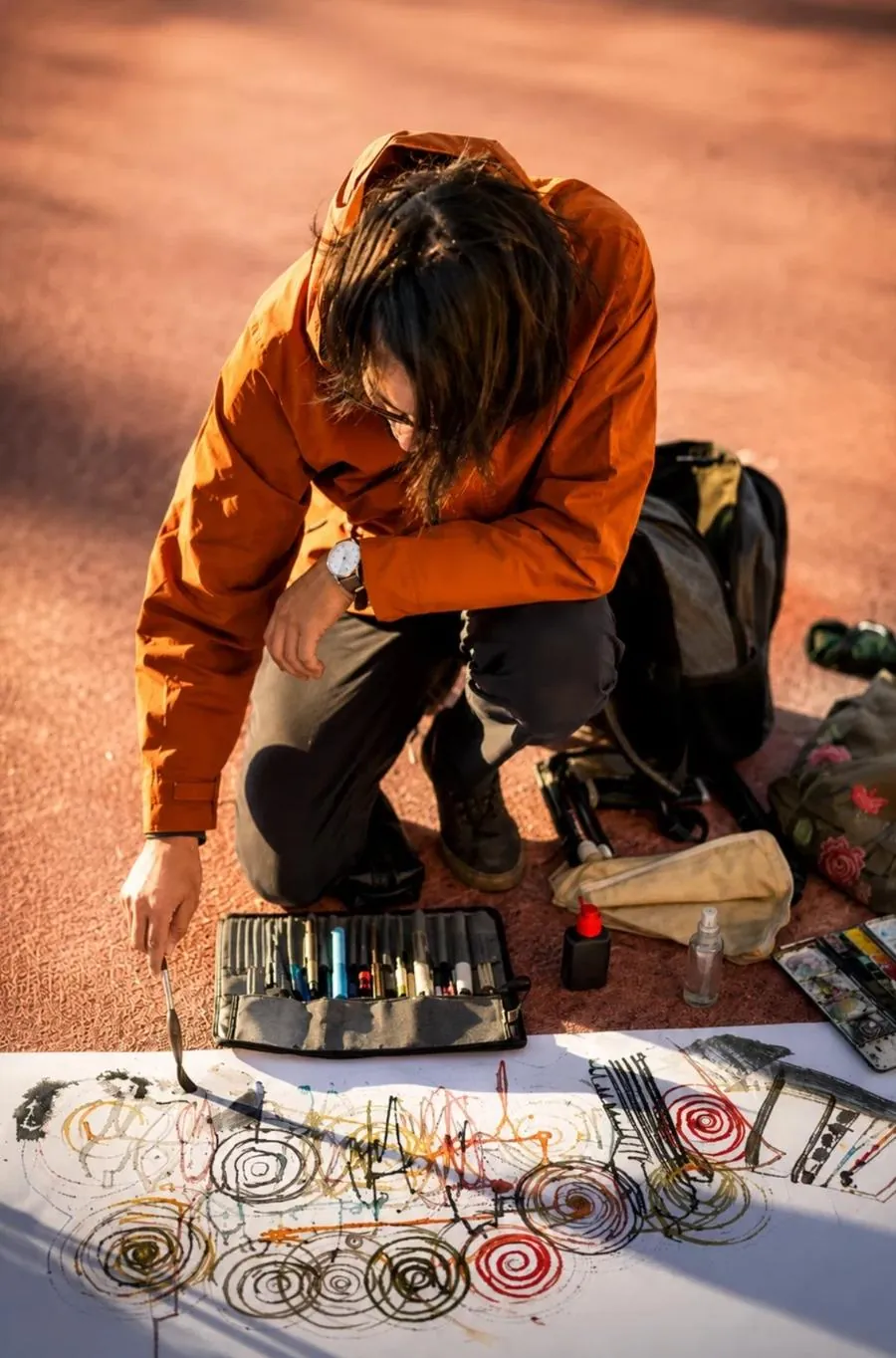
A meetup with the Urban Sketchers of Buenos Aires, near the Teatro Colón. That time we spread a large sheet of paper on the ground and everyone could draw whatever they wanted. This is how my part ended up: spirals of ink and color.
III
Old books, without restraint.
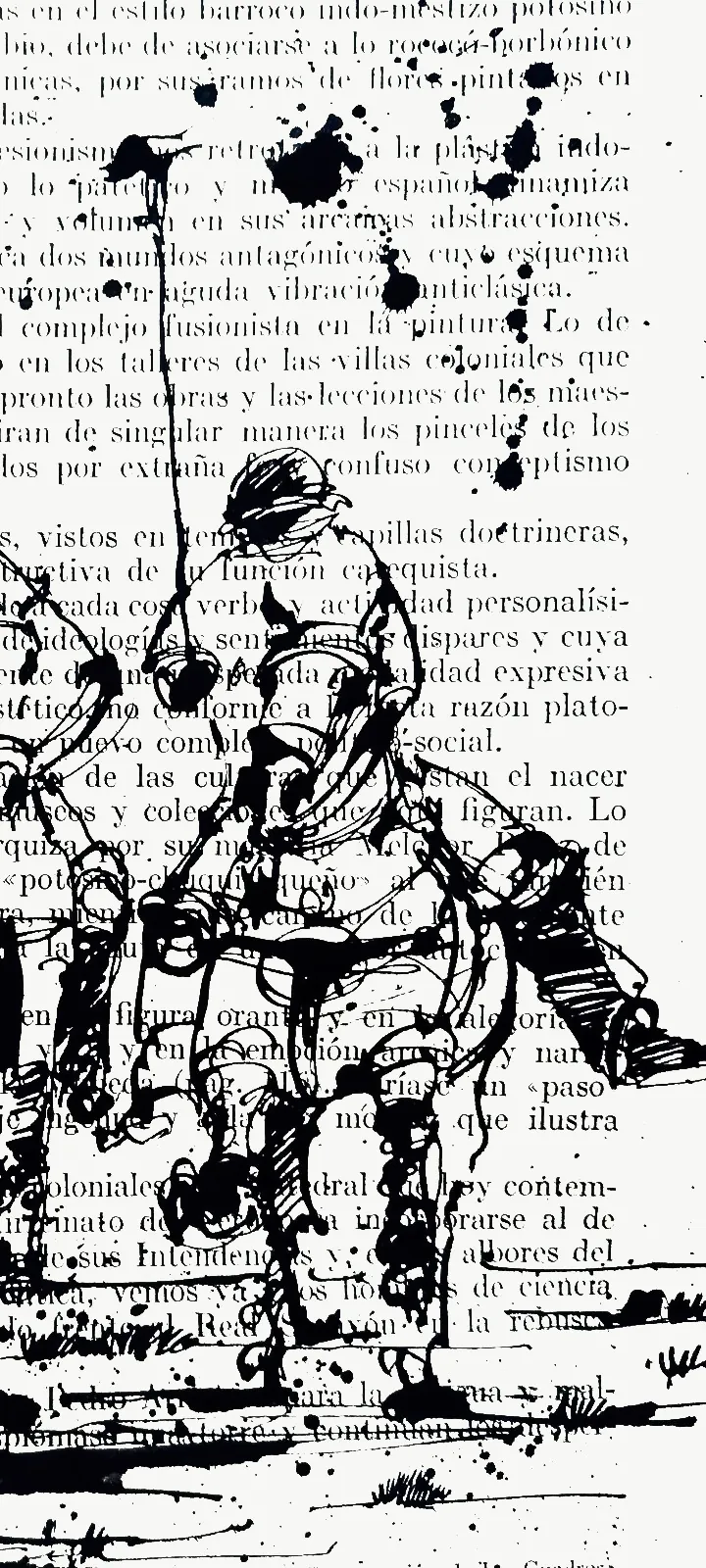
I like working in old books because I can make one drawing after another, fairly spontaneous, and experiment with concepts, textures and ink drips. I don't think much about the final result: what I'm after is developing a technique, a concept or a graphic language through repetition.
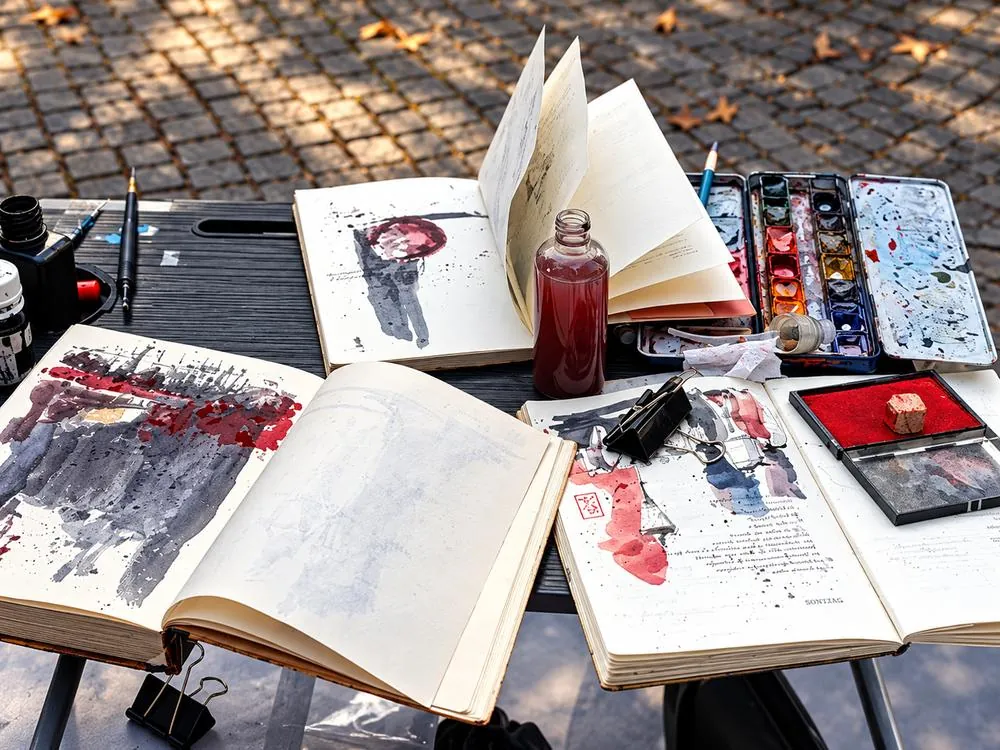
As an exercise it works really well, and everything stays in a single book, in order, instead of on loose sheets, the way I used to do it. In the end, depending on the taste of whoever owns it, the book can become a work of art in its own right.